As part of our collaboration with the Federal Armed Forces, we work on several research areas at the interface of data analysis, machine learning, and technical systems. These include the analysis of complex sensor and audio data, methods for forecasting temporal developments, anomaly detection, and AI-based approaches for military planning and technical condition monitoring. The aim of this research is to develop robust methods that derive reliabl information from heterogeneous and partly uncertain data, thereby supporting analysis, planning, and decision-making processes.
Contact: [email protected]
Sensor Analysis
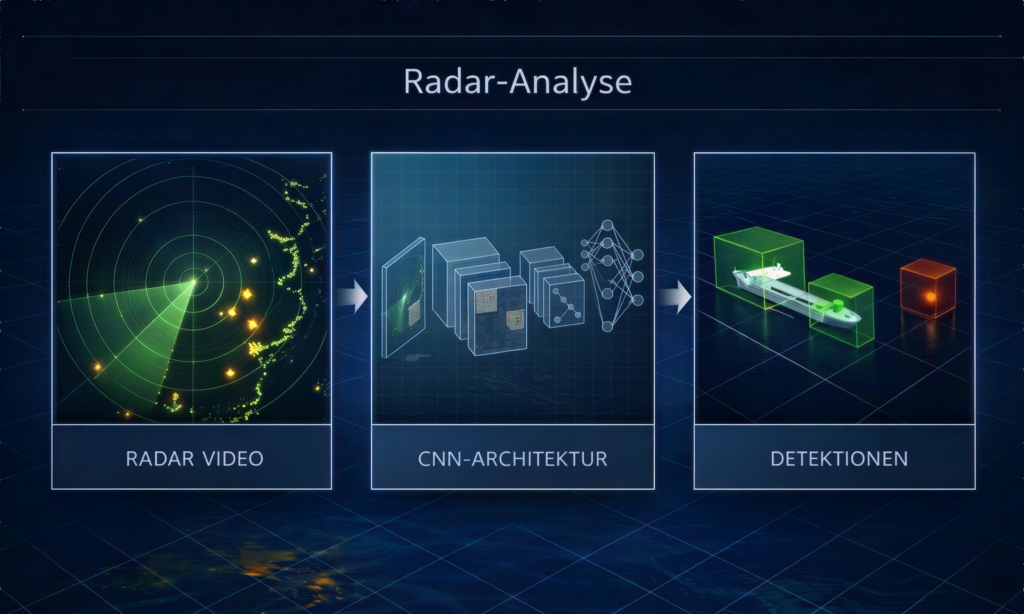
The analysis of modern sensor systems poses a major challenge, as measurement data is often affected by noise, interference, multipath effects, and dynamic environmental conditions. The goal is to extract robust and reliable information about objects, states, and scene structures from large amounts of high-dimensional raw data. Examples of such sensor systems include RADAR and SONAR technologies.
Modern deep learning methods enable the direct modeling of complex structures in sensor data and the efficient representation of high-dimensional measurement spaces. In particular, convolutional neural network-based approaches are used to automatically extract spatial and temporal patterns. Generative models, such as autoencoders, additionally allow for the learning of latent representations as well as the reconstruction and analysis of underlying signal structures. We investigate data-driven approaches to detection and classification in complex sensor-based applications.
Forecasting

Predicting future system states is a central component of data-driven analysis and decision-making processes. A key challenge lies in modeling complex temporal dynamics based on historical data and in deriving reliable forecasts. In real-world applications, data is often incomplete, noisy, or highly variable, necessitating robust and adaptive forecasting methods.
One application example is the forecasting of motion and trajectory paths based on AIS data. Modern machine learning methods enable the modeling of complex dependencies in such time series and the precise prediction of future movements. A central aspect is the quantification of uncertainties in the forecasts. We investigate methods for uncertainty estimation to not only refine predictions but also make them trustworthy, thereby fostering confidence in data-driven decision-making processes.
Anomaly Detection

Anomaly detection focuses on identifying unusual patterns in data that may indicate security-related events, misconduct, or previously unknown processes. A key challenge lies in reliably distinguishing between normal system behavior and actual critical deviations.
An important application area is the analysis of movement patterns in maritime traffic based on AIS data, from which typical routes, speed profiles, and behavioral patterns are derived. Deviations from these can indicate unusual or potentially critical situations. Both rule-based and probabilistic methods are used to detect such anomalies. While rule-based methods rely on known patterns and defined thresholds, likelihood-based models enable a data-driven assessment of observed behaviors. We are investigating the combination of these approaches for the robust identification of anomalies in maritime traffic.
AI-Assisted Military Planning
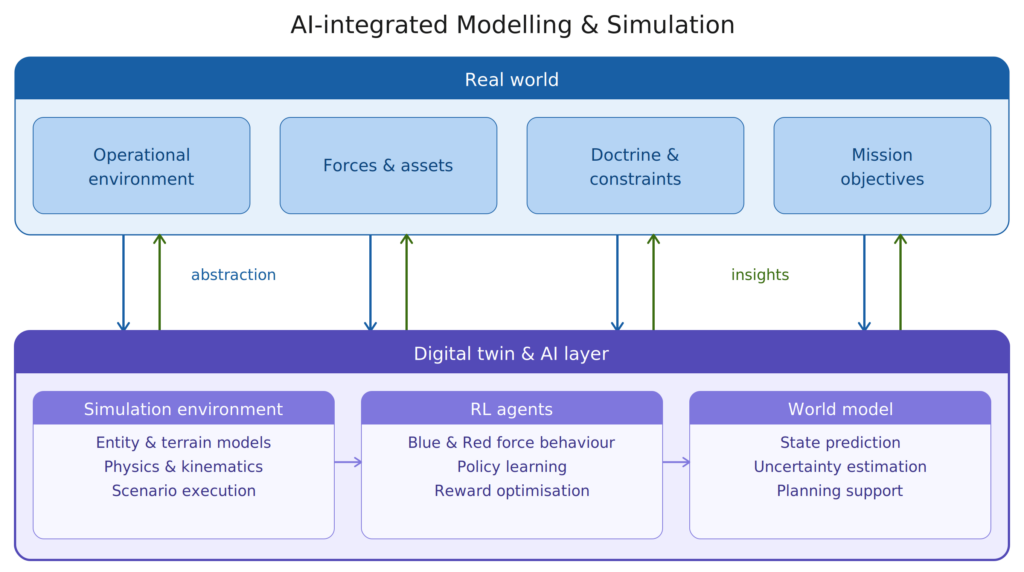
Modern military planning requires fast, well-founded decisions under uncertainty. At IMB, we develop AI-based methods that support leaders and staffs throughout the entire planning process.
The foundation is a high-resolution modeling and simulation environment. Real-world elements—such as terrain, forces, doctrine, and mission objectives—are abstracted into a digital twin that can be executed at scale. Reinforcement learning agents operate within this environment and learn effective behaviors for blue and red forces. A world model captures the underlying dynamics of the operational space and enables robust state prediction as well as uncertainty estimation, forming the basis for planning.
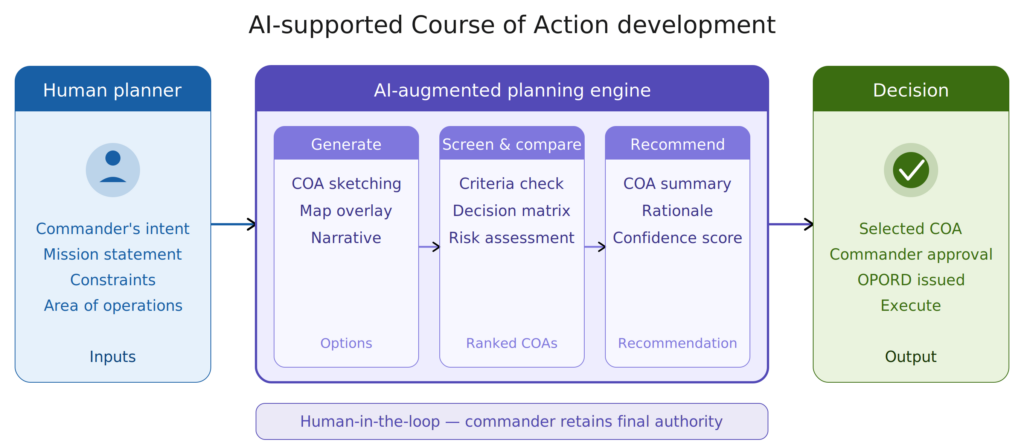
These simulation-based insights feed into course-of-action development. An AI-supported planning system generates, evaluates, and compares courses of action based on mission criteria. The system provides prioritized options with explanations, enabling human oversight, while the commander retains final decision authority.
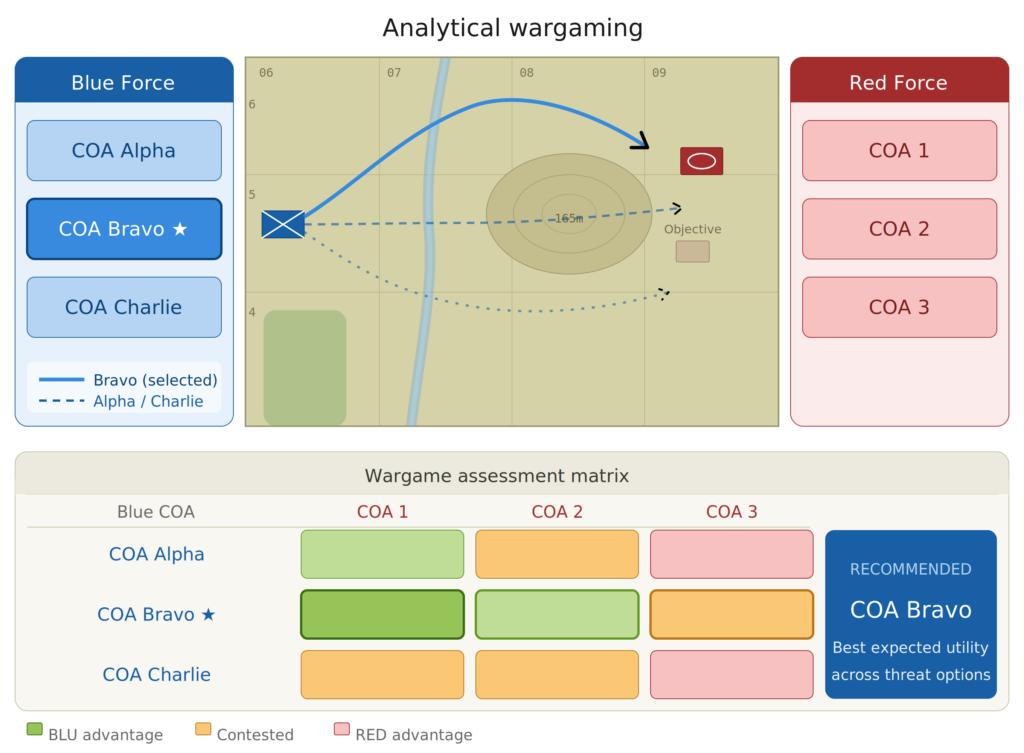
The selected course of action is then tested in an analytical wargame. Blue and red options are played against each other in a structured force-on-force execution, producing an evaluation matrix. The result is a transparent, evidence-based recommendation that serves as the basis for the order.
Together, these three capabilities form a coherent AI-supported planning pipeline—from environment modeling to an executable order.
Audio Signal Processing
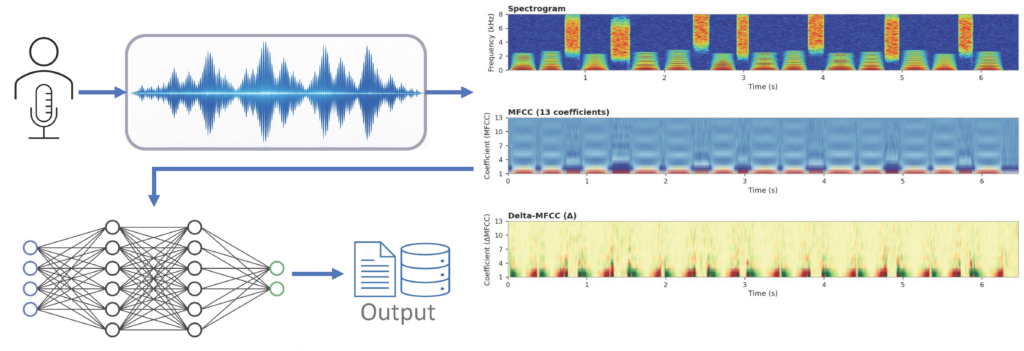
Spoken and written language are complex signals with a rich latent structure. Our research group develops methods for automated analysis of these signals under real-world, uncontrolled recording conditions. Methodologically, we work at the intersection of acoustic signal processing, phonetics, and deep neural network architectures.
Research focus areas include:
Speaker analysis in multi-speaker scenarios. Robust speaker identification and diarization in environments with changing speakers, overlapping speech, and varying acoustic conditions, including methods for deception detection and verification under uncooperative conditions.
Real-time processing on resource-constrained systems. Development of resource-efficient model architectures for inference on embedded systems and in environments without stable network connectivity, subject to strict requirements on latency and energy efficiency.
Multilingualism and language identification. Language classification and language-agnostic feature extraction for deployment in multilingual, internationally diverse communication environments.
Engineering
Technical systems rarely fail without warning; the signals are usually present, but are not systematically captured, structured, or analyzed. Our research group develops methods that close this gap systematically: from raw measurement data of complex machines and systems to validated, decision-relevant condition information for operators and maintenance personnel.
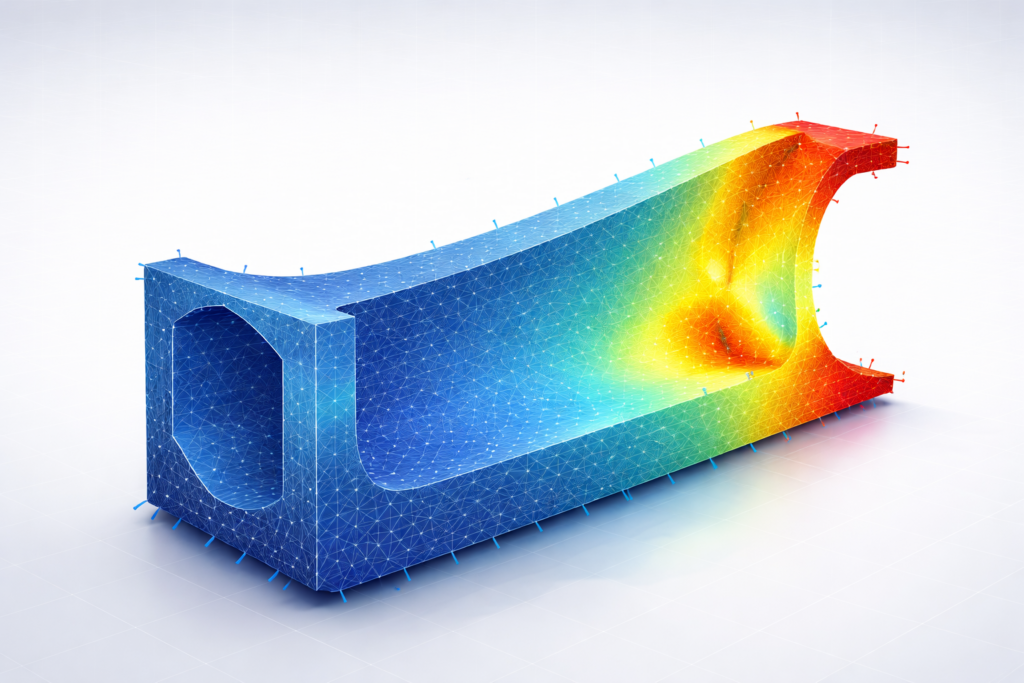
A central research focus is condition monitoring under real-world operating conditions. We investigate how heterogeneous sensor data, such as vibration, temperature, acoustics, and further modalities can be continuously acquired, synchronized, and analyzed for anomalous patterns. Of particular interest is the robustness of such systems against measurement noise, sensor failure, and changing operating states, where classical threshold-based methods systematically fall short.
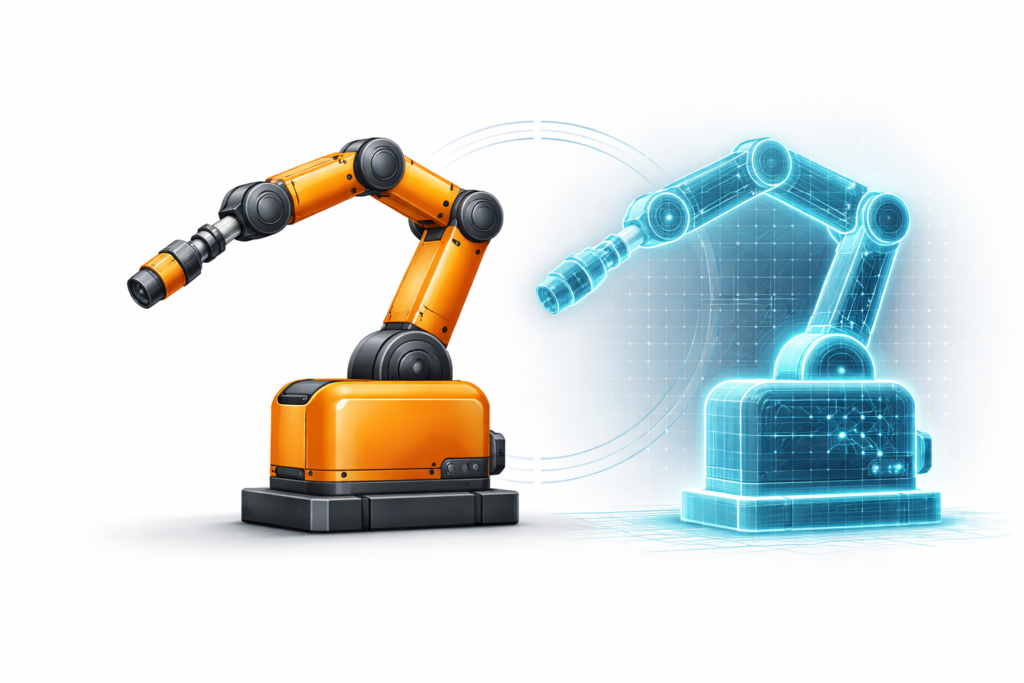
Building on this, we explore data-driven approaches for predictive maintenance: the early, model-based prediction of degradation processes and failure probabilities before critical states are reached. To this end, we combine physics-informed models with machine learning methods with the goal of not only detecting patterns but understanding and quantifying their underlying causes. In selected use cases, this approach is extended by digital twin architectures: a continuously synchronized system model that allows operating states to be not only observed, but scenarios to be simulated prospectively and intervention points to be optimized on a data-driven basis.
Letzte Änderung: 2. April 2026