You can find an overview on all courses and thesis-offerings here.
For registering at the PC-Pool MB, please follow this Link.
Bachelor-, Master Theses & Student Research Projects
Would you like to write your thesis or Student Research Project on a project related to the Federal Armed Forces? We offer you the opportunity to support the methodological development of the Federal Armed Forces with algorithmic capability enhancements.
Together with our cooperation partners from the Federal Armed Forces, we develop exploratory approaches to improve existing and future problems.
We serve the water, land, and air domains with topics from the fields of
- image processing,
- sensor evaluation,
- ontologies, as well as
- predictive analytics, and
- protection.
Thanks to existing cooperation agreements, you can conduct research with us using real data and use cases, and do not have to limit yourself to artificial data and scenarios.
Join us in developing the military algorithms of tomorrow. We look forward to hearing from you.
For more information on specific theses or Student Research Projects, please refer to the Ilias (link below).
ILIAS-Link to Bachelor-, Master Theses & Student Research Projects
Lectures
Bachelor Engineering Science
Discrete Control Systems
B.Sc. Engineering Science, ILIAS-Link for Students, Fall Trimester
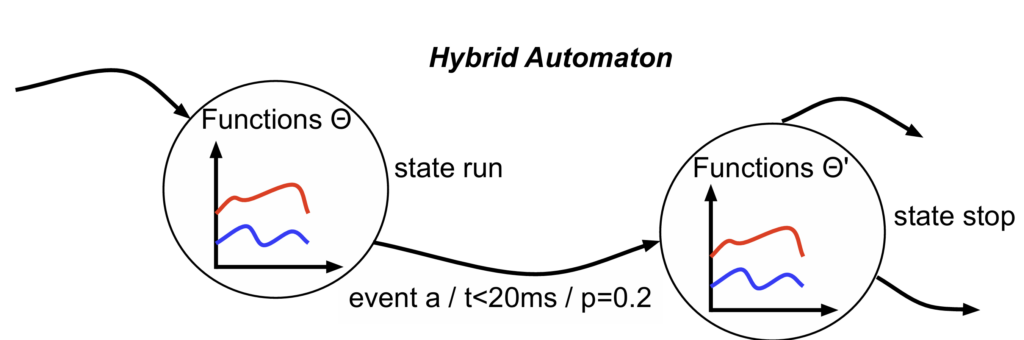
This module introduces the fundamentals of automated plant functionalities and related control structures. A central focus is placed on finite state machines and their variants. Both their formal foundations and methods for their learning and analysis are covered. In addition, Markov chains as well as approaches to the observation and diagnosis of discrete systems are introduced.
Programming in C
B.Sc. Engineering Science, ILIAS-Link for Students, Winter Trimester
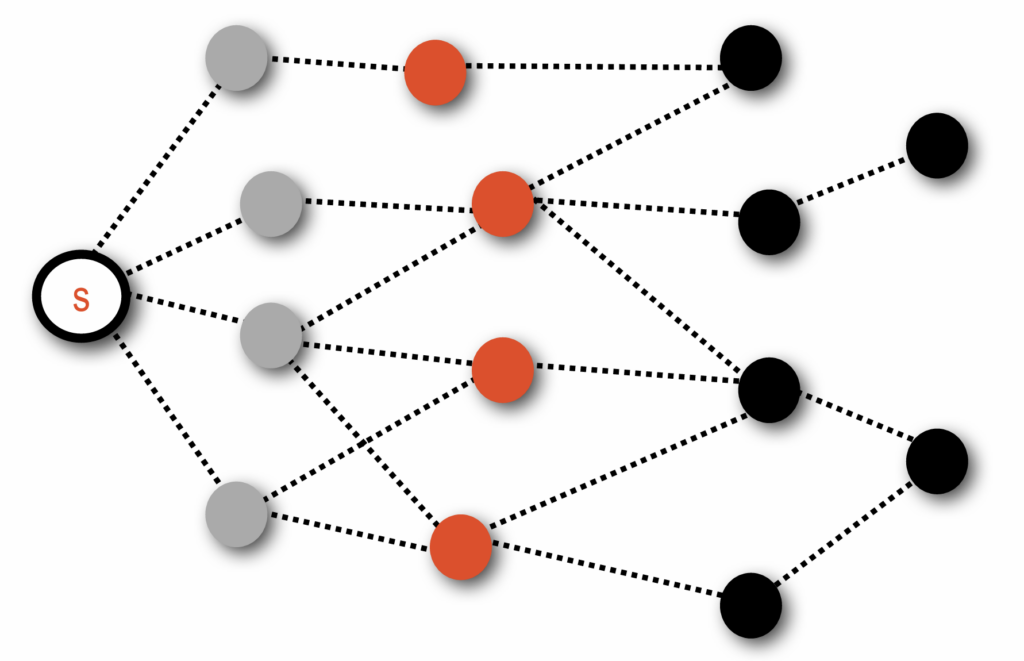
Fundamental concepts of information processing and data representation are introduced. These include coding, number systems, character representation, as well as key aspects of operating systems, file management, memory technologies, and data communication. In addition, the basics of graphical data processing and output are addressed. Another focus is the C programming language, including its core language concepts and the fundamentals of procedural programming.
Programming and Computational Methods for Data Science
B.Sc. Engineering Science, ILIAS-Link for Students, Spring Trimester
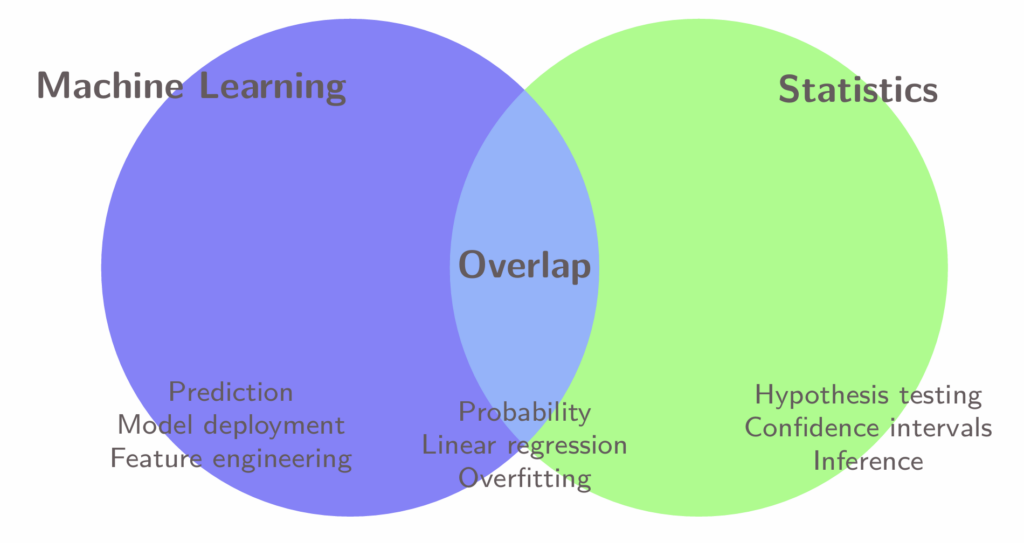
The fundamentals of computational methods for data science and the mathematical background of central analysis techniques are covered. This includes data preparation, data visualization, and the typical workflow of data analysis. Students learn how to analyze data systematically, interpret it exploratively, and critically evaluate the results of suitable analytical methods. In addition, regression and classification problems as well as simple related algorithms are introduced and implemented in Python.
Bachelor Maschinenbau
Informatik I
B.Sc. Maschinenbau, ILIAS-Link for Students, Fall Trimester
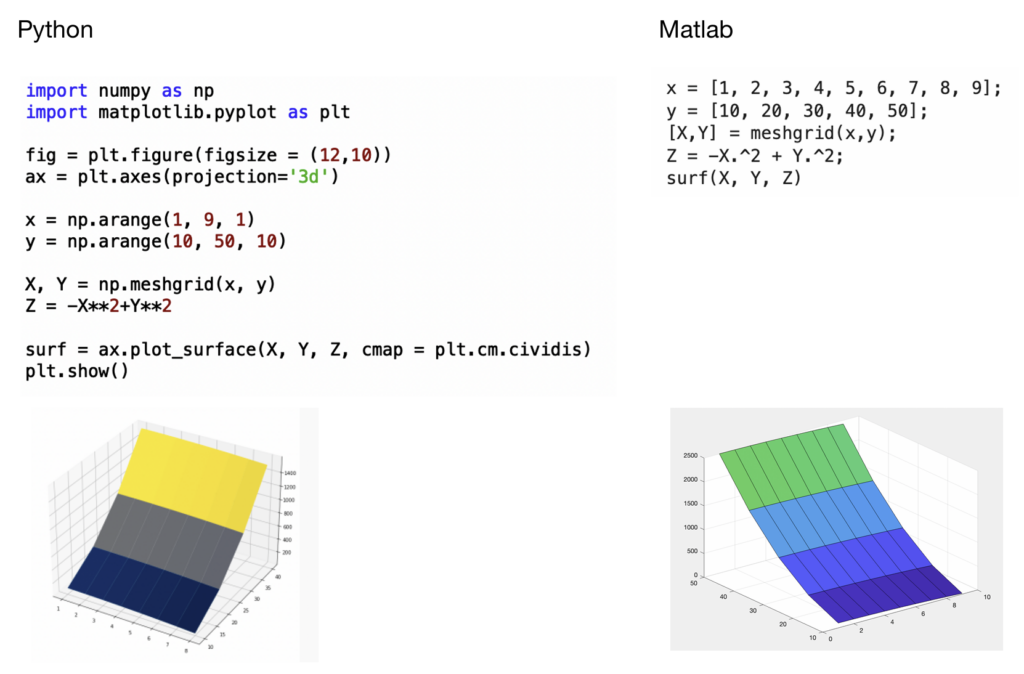
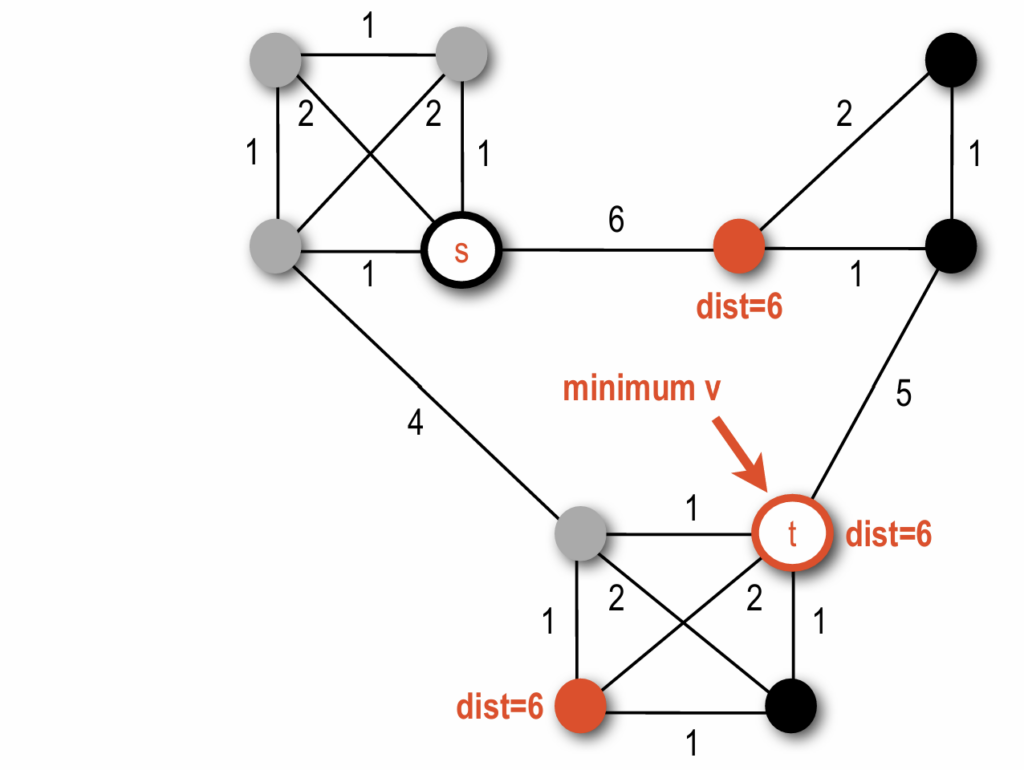
The focus is on fundamental algorithms and data structures as well as their efficient application. Various sorting and searching methods are covered, including their time and space complexity, along with elementary data structures such as lists, arrays, heaps, and binary trees. In addition, key concepts of graph theory are introduced, including traversal methods, connectivity, topological sorting, and shortest-path algorithms. The course is complemented by an introduction to the basic ideas of scripting languages using Python and Matlab as examples.
Informatik II
B.Sc. Maschinenbau, ILIAS-Link for Students, Fall Trimester
Object-oriented and component-oriented concepts of software development are introduced. This includes the corresponding programming and modeling paradigms as well as suitable development processes. In addition, the use of UML for modeling software and development projects and of SysML for modeling system development projects is covered.
Master Engineering Science
Machine Learning
M.Sc. Engineering Science, ILIAS-Link for Students, Winter Trimester
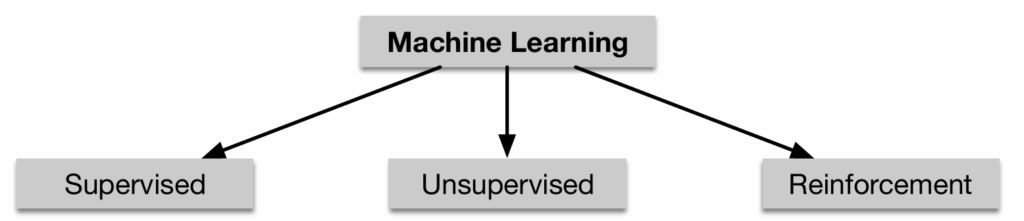
This module covers fundamental problem classes in machine learning, including supervised learning, unsupervised learning, and reinforcement learning, as well as classification and regression. In addition, statistical evaluation metrics such as ROC, AUC, and F-measure as well as probabilistic models for information fusion and data analysis are introduced. The course also presents key machine learning methods, including neural networks, autoencoders, restricted Boltzmann machines, and deep neural networks together with their learning algorithms. It is rounded off by applications in the context of cyber-physical systems and the practical use of relevant tools, in particular Python.
Master Mechatronik
Methoden der Künstlichen Intelligenz II
M.Sc. Mechatronik, ILIAS-Link for Students, Fall Trimester
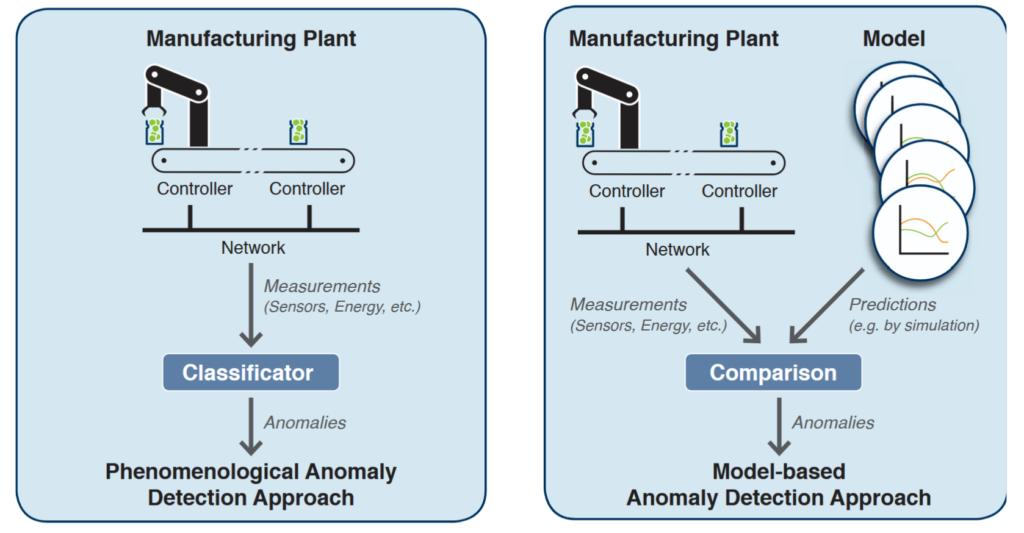
The fundamentals of propositional logic, including normal forms and resolution, are covered as a basis for formal reasoning methods. Building on this, the course introduces different diagnostic approaches, such as case-based, heuristic, spectrum-based, and model-based diagnosis, complemented by examples such as alarm management and consistency-based diagnosis using propositional logic. Finally, the fundamentals of predicate logic as well as reasoning methods based on unification and resolution are introduced.
Informatik III: Programmierung Verteilter Systeme in UNIX
M.Sc. Mechatronik, ILIAS-Link für Studierende, Spring Trimester
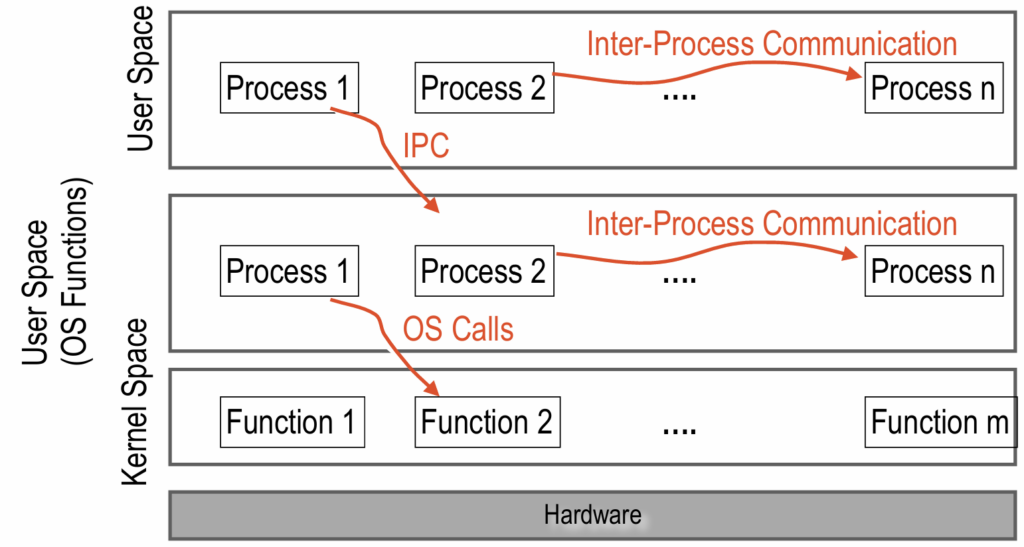
The course focuses on fundamental concepts of Unix-based systems and their practical application. It covers the use of the shell, working with directories, compiling and executing programs, as well as input and output via files and terminals under Unix permission management. In addition, processes, their creation, management, and scheduling strategies are introduced. The course is complemented by central methods of inter-process communication, including signals, pipes, FIFOs, sockets, as well as concepts such as critical sections and deadlocks.
Bildverarbeitung
M.Sc. Mechatronik, ILIAS-Link für Studierende, Spring Trimester
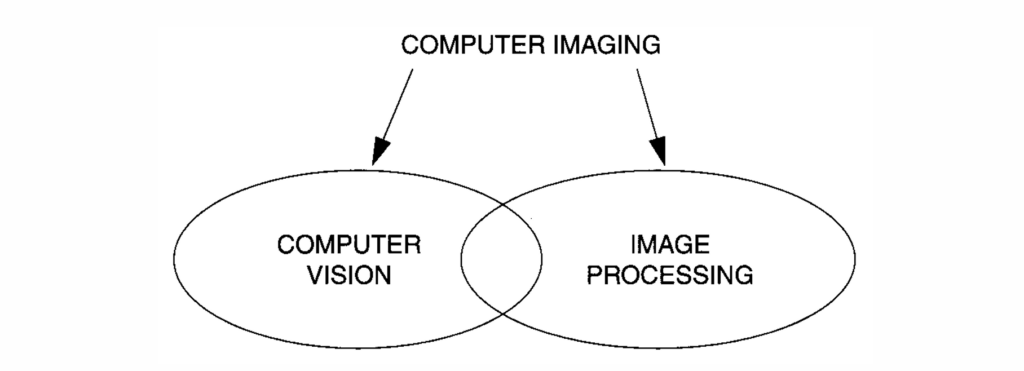
The course covers fundamental methods of digital image processing, including pixel operations, point and histogram operations, as well as linear and nonlinear spatial filters. Among the topics addressed are low-pass and high-pass filters as well as morphological operations such as dilation and erosion. In addition, an introduction to image classification is provided, including typical classification tasks and convolutional neural networks (CNNs).
Vertiefungslabor-Versuche im Master Mechatronik
Letzte Änderung: 18. March 2026