Contact: Ahmad Takriti
Project starts: 10.2024
Project ends: 06.2026
Until now, it has been common practice to use almost exclusively newly manufactured and corrosion-protected system components when installing new steel vehicle restraint systems. The relevant specifications are contained in the Additional Technical Contract Conditions and Guidelines for Vehicle Restraint Systems – ZTV FRS, 2013 edition / 2017 version.
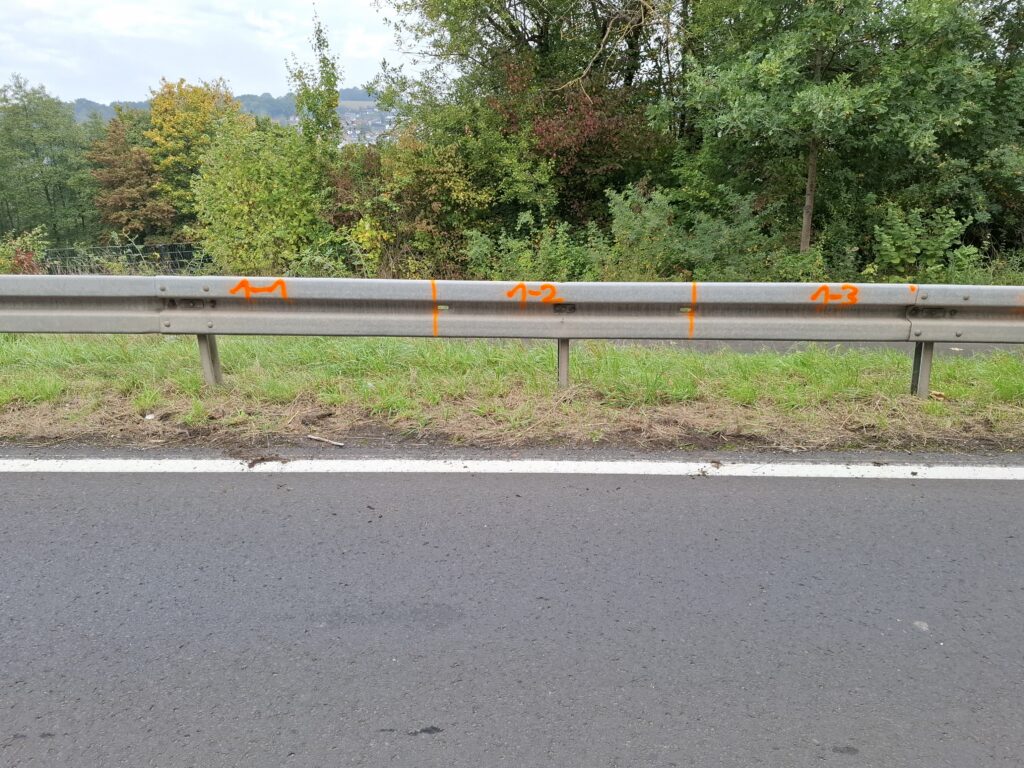
In order to achieve climate protection goals, all possible savings potential must be identified and exploited, including in road infrastructure and its equipment. Rising energy costs, in particular, call for greater consideration of sustainability aspects in existing approaches.
The aim of the research project is to determine the possibilities and material-specific constraints for reusing undamaged system components in steel protective structures. Road safety should continue to be adequately ensured by maintaining performance and durability even when using aged and, if necessary, newly galvanized components.
A concept to be developed for the assessment of systems or individual components should be based on easily determinable characteristic values and should be oriented both towards the properties of existing vehicle restraint systems and the applicable normative framework conditions and standard practices.
The first step is to determine the possible changes in the type and characteristics of system components in older steel protective structures. Any changes due to aging, environmental influences, or minor deformations must be determined and assigned to characteristic values. Suitable methods, such as simulation procedures, should be selected and used to determine the changes, possible characteristic values, and potential influences on performance and durability, and to carry out comparative studies.

Letzte Änderung: 7. January 2026